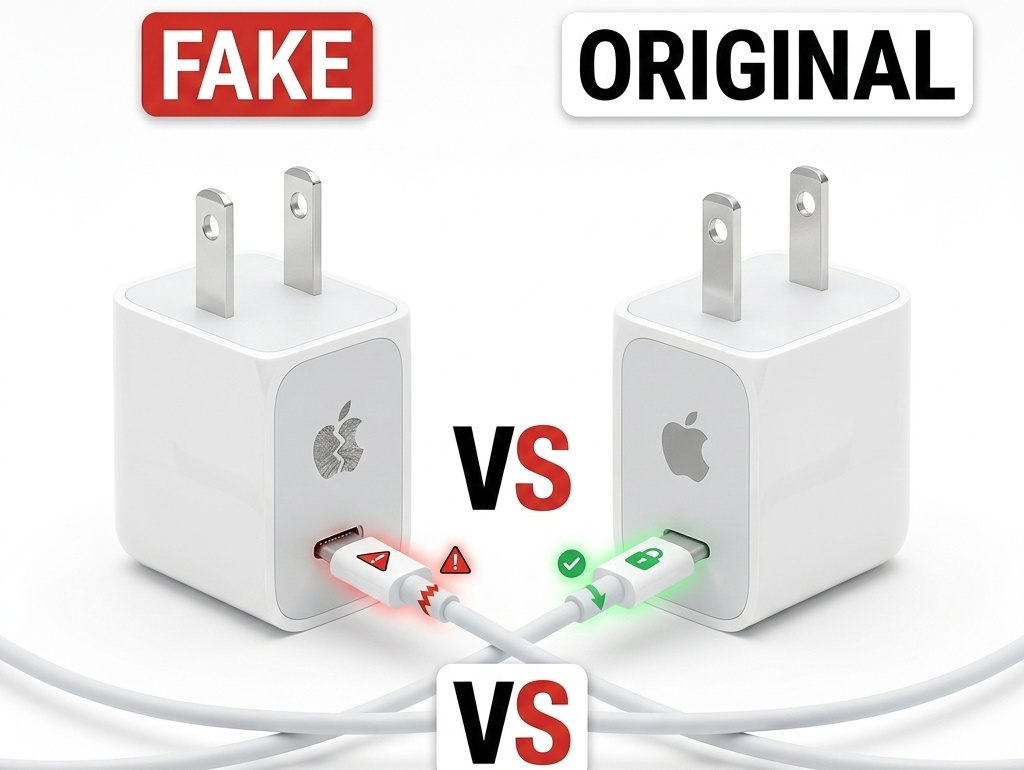
How to Check Original vs Fake Apple Charger (
Pakistan Real Market Guide)
Buying a genuine Apple charger in Pakistan has become incredibly difficult. Most online guides are old and tell you to look for a serial number inside the USB-C port. This is wrong. In the latest models, Apple has stopped printing serial numbers inside that port.
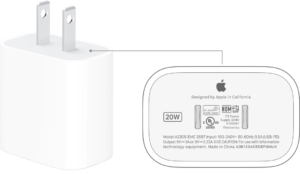
Today’s “Master Copies” are so good they replicate the green pull-tabs and even match the serial number on the box. To protect your iPhone’s battery, you have to look at the chipset and the internal pins. Here is the only 100% real guide to help you identify a genuine Apple adapter in the local market.
1. The MacBook Test (The Only 100% Proof)
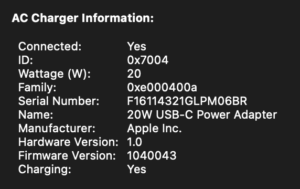
This is the “Gold Standard.” Every original Apple charger has a smart communication chip inside that “talks” to your Mac.
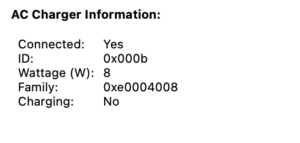
How to do it: Connect your charger to a MacBook using a USB-C cable. Go to About This Mac > System Report > Power.
The Original: Your Mac will actually read the charger’s brain. You will see “Manufacturer: Apple Inc.”, the wattage, and a unique Hardware Serial ID.
The Fake: A copy doesn’t have this expensive chip. The Mac will show zero information or just generic data. If the Mac can’t see “Apple Inc.”, it’s a fake.
2.Don’t Trust the Weight Anymore
In the past, fakes were light and original chargers were heavy. Not today.
The Metal Scam: Master copy makers now glue scraps of metal inside the plastic shell just to make it feel heavy.
The Truth: A fake charger can weigh exactly 58g (US 2-pin) or 86g (UK 3-pin) and still be a dangerous copy. Weight is okay for a quick check, but the MacBook Test is the only way to be sure. Also, remember that 30W+ chargers are always much heavier than the 20W version.
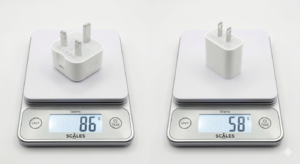
3. Physical “Tell-Tale” Signs (Printing)
Even the best master copies often fail the “Perfection Test.” Apple’s manufacturing is flawless; fakes are not.
The Printing: Apple’s printing is 100% perfect. Use a magnifying glass. If you find even one misspelling, an extra space between words, or a tiny alignment error in the “Designed by Apple” text, it is a fake.
The Box: While fakes have copied the “Green Pull-Tab” and seals, high-end original boxes have a premium texture and zero printing errors.
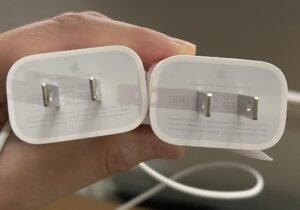
4. The 8-Pin Port Secret
Stop looking for a serial number inside the C-port. Instead, look at the pins.
The Layout: Inside the USB-C port of a real Apple adapter, there are 8 pins total.
The Pattern: You should see 1 pin on the left, 6 pins in the middle, and 1 pin on the right.
The Look: These pins should have very clean, tiny etched lines in a specific pattern. If the pins look rough, scratched, or are fully filled with metal, it is a copy.
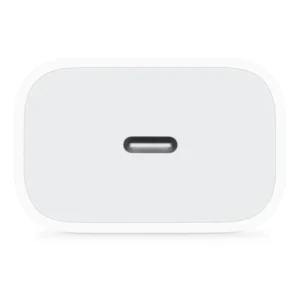
5. Serial Number Myths: USB vs USB-C Chargers
Many guides still tell people to check the serial number inside the charging port — but that rule depends on the type of charger and port.
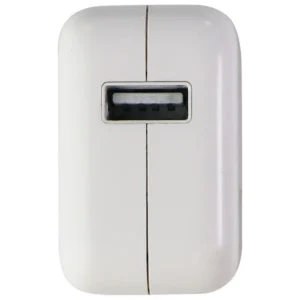
USB-A Chargers (Older Models)
Usually 5W, 12W, or MacBook USB-A chargers
Have serial numbers inside the USB port
USB-C Chargers (Modern Models)
Most 20W, 18W, 30W, 35W, 40W, 61W US 2-pin, 87W US 2-pin, 96W US 2-pin
Do NOT have serial numbers inside the Type-C port — this is normal
UK 3-Pin MacBook Chargers
Some 30W, 61W, 87W, 96W UK 3-pin models have hidden serial numbers behind the removable plug kit
Remove the plug head to view the serial number
4. The Heat & Safety Factor
In the Pakistani summer, all fast chargers get warm. However:
Original: Distributes heat evenly and manages power to protect your iPhone battery.
Fake: Becomes dangerously hot (as does your phone). This is a sign of a low-quality transformer that risks exploding or frying your iPhone’s charging IC.
6. The “Internal Kit” Secret: Architecture of a 100% Original
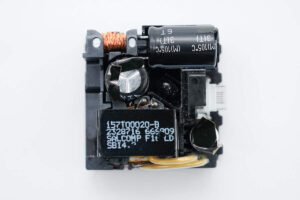
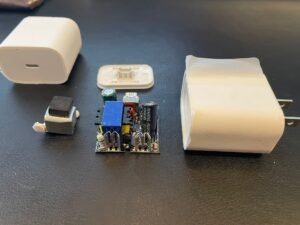
If you were to crack open a 20W adapter, the difference in the “kit” is night and day. Counterfeiters use generic, dangerous layouts that fail under the Pakistani heat.
The Original Kit: * High-Density Layout: Every millimeter of space is used. Apple uses custom-made, high-grade capacitors and a “Planar Transformer” that is extremely thin but powerful.
Isolation Gap: There is a clear, physical “moat” or gap between the high-voltage side and the low-voltage side of the board. This prevents a power surge from traveling directly into your iPhone.
Thermal Paste/Padding: Apple uses premium thermal compounds to pull heat away from the chips and into the outer shell.
The Copy/Master Kit:
The “Weight Hack”: You will often find a literal piece of scrap metal glued to the inside of the shell just to make it feel heavy.
Messy Soldering: If you see “blobs” of solder or wires jumping across the board, it is a fake.
Cheap Capacitors: Fakes use tall, cheap electrolytic capacitors that leak or “pop” over time, which is why fake chargers often start making a “hissing” or whistling sound after a few weeks.
8. Performance Reality: The “50% in 30 Minutes” Myth
You will see “Fast Charging” advertised everywhere, but here is the technical truth that most sellers hide.
The Apple Benchmark: Under perfect lab conditions (room temperature 22°C, 100% battery health, screen off), a genuine 20W adapter can charge an iPhone to 50% in approximately 30-35 minutes.
The Pakistan Reality: In our environment, several factors can slow this down:
Battery Health: If your iPhone battery health is at 85% or lower, the “chemical age” of the battery increases resistance. Your phone will charge slower to prevent swelling.
Ambient Temperature: If you are charging in a room without AC during a Pakistani summer, your iPhone will automatically throttle (slow down) the charging speed to protect the internal motherboard from heat damage.
Phone Condition & Apps: If you have apps running in the background, a high-brightness screen, or a thick heat-trapping case, that “30-minute” window can easily stretch to 45 or 50 minutes.
The Verdict: If your phone is old or the room is hot, don’t blame the charger immediately. A genuine charger’s job is to charge as fast as safely possible, not to force power into a struggling battery.
7. The “Repacking” Truth: Why Boxes Don’t Matter
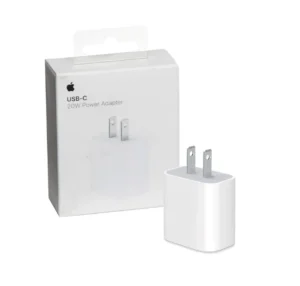
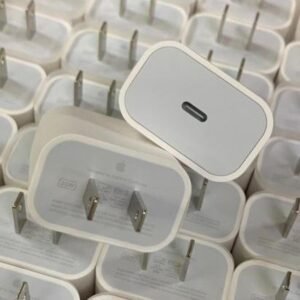
Many Pakistani sellers hide this fact: most genuine Apple chargers are imported “loose” without boxes.
Why loose? Importing retail boxes from the USA or UK increases shipping volume and custom duties. To keep costs reasonable, adapters are shipped in bulk and repacked locally in high-quality boxes.
Repacking is normal: It doesn’t mean the charger is fake.
The problem: Some dishonest sellers sneak a fake charger into a box and sell it as original.
The Scam: Many shops use this “Repacked” reality to sneak a fake charger inside a box and sell it at an “Official” price of Rs. 10,000+.
✅ Tip: Don’t judge authenticity solely by the box seal or packaging. Instead, verify the charger using the MacBook system test, port inspection, and chipset check.
5. The Truth About Warranty in Pakistan
There is no official Apple Store in Pakistan, which creates a “Warranty Trap.”
The Big Brands (GNext, Mercantile, Future Tech): These companies import stock and offer their own warranty. However, they often charge double the price of the adapter to cover the risk of those few claims. Essentially, you are paying for two chargers just to get a warranty on one.
The “Fair Price” Zone: Based on our import expertise, the ideal price for a 100% Genuine 20W adapter Should be between Rs. 5,000 and Rs. 6,500. In this range, a seller makes a fair profit of Rs. 500 to Rs. 1,500.
Expert Note: If someone is selling for more than Rs. 7,000, they aren’t necessarily selling a “better” charger—they are just charging you for their expensive mall rentals or brand name.
9. Why Fake Chargers Are Dangerous
Using counterfeit chargers can lead to serious problems.
Common risks include:
unstable voltage output
overheating
battery damage
damage to the iPhone charging IC
potential electrical hazards
A charger might look identical externally, but the internal electronics determine whether it is safe or dangerous.
10. How to Buy Safely
Don’t just buy from any shop because they have a fancy sign.
Check Reputation: Look at real social media reviews and history.
Verify Price: If it’s under Rs. 4,000, it’s likely a fake. If it’s over Rs. 7,000, you are likely being overcharged.
Test Before Buying: If possible, bring a MacBook or a USB-C Tester tool to check the chipset data.
⚡ Quick Checklist: Original vs Fake Apple Charger
MacBook / USB-C Tester shows Manufacturer: Apple Inc., Wattage, Serial (if applicable), Model
C-Port (20W, 18W, 30W 2-pin US, 35W, 40W, 61W 2-pin, 87/96W 2-pin US): no serial inside port
3-pin UK adapters (30W, 61W, 87W, 96W) may have hidden serial inside plug
Type-C port pins: 8 pins (1 left, 1 right, 6 middle), clean and etched, not irregular
Printing & logo: no typos, extra spaces, or misaligned text
Internal build: high-density layout, premium capacitors, planar transformer, proper thermal padding; messy soldering or cheap components = fake
Weight: informative only; modern fakes match weight with metal pieces; heavier adapters naturally weigh more
Heat & performance: original distributes heat evenly and charges safely; fake overheats and risks device; expect ~50% charge in 30–35 mins under ideal conditions
Box & seal: most genuine chargers in Pakistan are loose and repacked; don’t rely on box alone
Buy safely: verify with MacBook/tester, check pins, printing, and internal kit; buy from trusted sellers only
Store: Buy from a reputable seller like Apple Mart who ensure original verification.
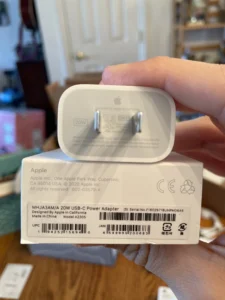
Where to Buy a Genuine Apple Charger in Pakistan
If you want a 100% original Apple charger, make sure the seller clearly states that the product is genuine and provides proper packaging and verification details.
➡ [Browse Our Original Apple Adapter – Apple Mart Pakistan]
Buying from a trusted store helps ensure you receive the real product with proper quality and safety.
Final Thoughts
A fake charger might save you a few thousand rupees today, but it can cost you a 50,000 rupee battery repair tomorrow. At Apple Mart Pakistan, we don’t just sell chargers; we provide peace of mind by verifying every product’s chipset.
